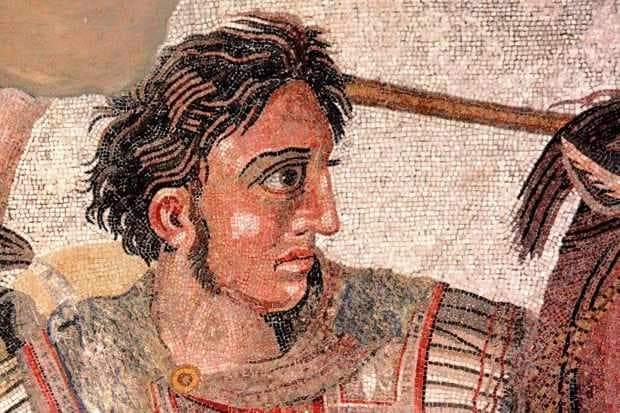
Alexander’s Great Contract of Love

“See the whole world as your homeland, with laws common to all, where the best will govern regardless of their race.” Alexander the Great, Opis, (Iraq) 324 BC

Many assume Alexander’s “Greatness” to be based solely upon his courage in battle and his undefeated status in war. Yet his vision, philosophical outlook, fair and just judgments, commitment to prayer before and after each engagement and his devotion to God and his Gurus are the eternal values to which he can rightly be praised. The “Oath of Opis” reveals the authentic nature of his nobility and his  worthiness of the  title of “The Great”.
We all know of his many battles, which he never lost, yet few know he organized 100s of Religious Festivals all through Asia as he marched towards India.

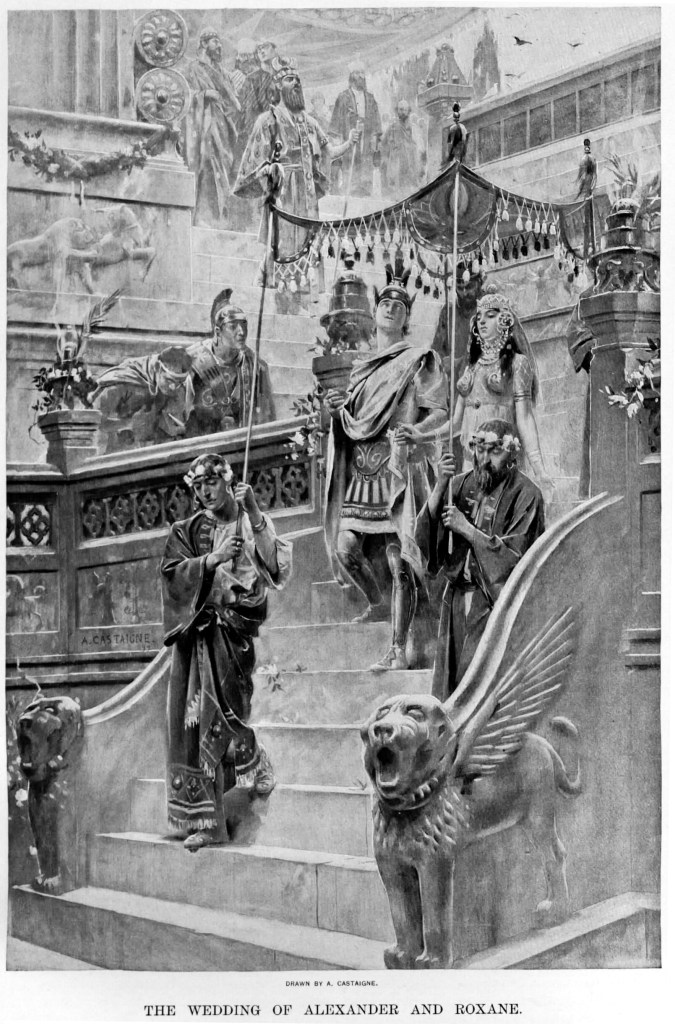
He married and truly loved a Princess named Roxanne (Rukshana) from the modern region of North Afghanistan and Uzbekistan. She saved his life by bonding with King Puru as his sister through the  Raksha Bandhan rite.

When Alexander fell off his horse Bucephalus, in the battle, King Puru lifted his arm for the kill. Yet upon seeing the Raksha Bandan locket upon his wrist, he didn’t have the heart to widow his Dharmic sister, thus allowing Alexander to remount and rejoin the battle.
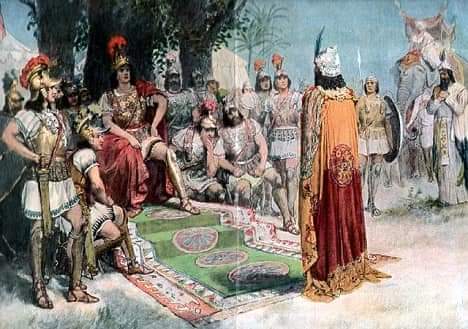
Upon victory Alexander then asked King Puru,”How would you like to be treated?” King Puru replied, “Like a King.” Alexander agreed, befriended him and refused to claim any of King Puru’s lands.

The title The Great was actually given by the later Romans. In his own time he was called Invincible after the Oracle of Delphi declared, ‘You are invincible, my son.’

Upon entering Jerusalem, the entire city welcomed him as a liberator. “When Alexander sees Jaddus dressed in the robes of the High Priest and in a turban adorned with a gold plate engraved with the Hebrew name of God (the four Hebrew consonants “YHWH” commonly rendered in English as “Jehovah”) , “he approached by himself, and adored that name, and first saluted the high-priest.”
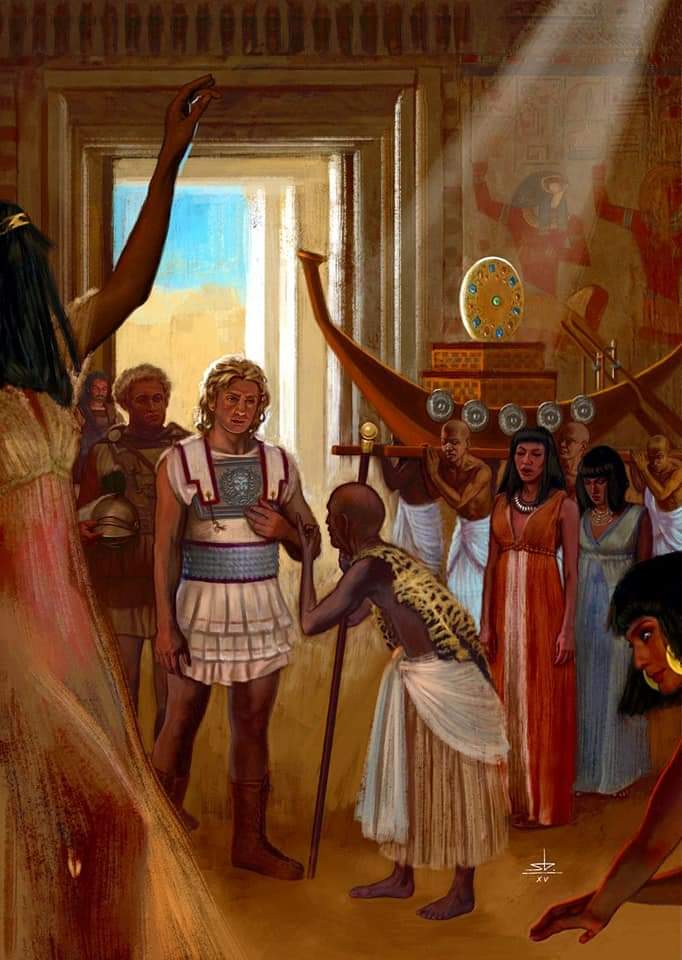
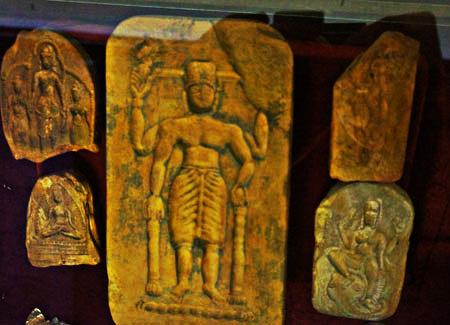
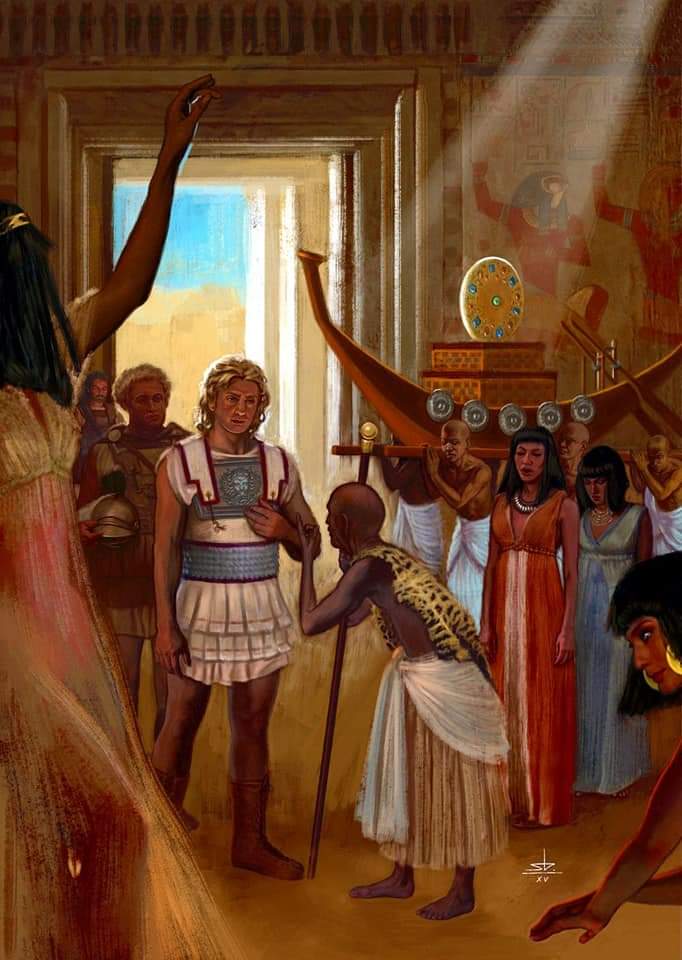
Alexander was again welcomed as a liberator in Egypt where he embarked on his famous pilgrimage to Siwa. Later Egyptian carvings depict Alexander being given the Staff of Kingship as the Pharaoh of Egypt by a Blue colored Amun Ra/Vishnu.  (As seen in images added to this post.)

Alexander the Great at the Oracle of Amun, Siwa.Liebig collectors card, 1950 Alamy Stock photo

After he decreed all citizens as equal, be they Persian, Greek, Macedonian or Indian, many of his elite Macedonians felt slighted. After much wrangling his Macedonians apologized and were forgiven. He then arranged a banquet in which he made the famous “Oath of Opis”. In this oath one recognizes the true Greatness of Alexander.

“The occasion culminated with Alexander’s speech also known as Alexander’s “Oath”. Even today the leaders of states and international organizations consider it as their guiding light.”

The “Oath” of Alexander the Great
(OPIS, 324 BC)

“Now that the wars are coming to an end, I wish you all to prosper in peace.

From now on, may all mortals live as one people, in fellowship, for the good of all.

See the whole world as your homeland, with laws common to all, where the best will govern regardless of their race.

Unlike the narrow-minded, I make no distinction between Greeks and Barbarians.

I am not interested in the origin of the citizens, or the race into which they were born.

I have only one criterion by which to distinguish them: their virtue.

For me, any good foreigner is a Greek and any bad Greek is worse than a Barbarian.

If disputes ever arise among you, do not resort to weapons, but solve them peacefully.

If needed, I will arbitrate between you.

See God, not as an autocratic despot, but as the common father of all so that your conduct will be like the life of siblings of the same family.

I, on my part, see you all as equal, whether you are white or dark-skinned.

And I wish you all to be not only subjects of the Commonwealth, but members of it, partners of it.

To the best of my ability, I will strive to do what I have promised.

Let us hold onto the oath we have taken tonight with our libations as a Contract of Love”.

Evidences regarding the historicity of Alexander’s Oath
http://www.helleniccomserve.com/historical_sources_alexander.html

Evidences regarding the historicity of Alexander’s Jerusalem Visit  https://biblereadingarcheology.com/2018/01/29/when-alexander-the-great-came-to-jerusalem/

Alexander Annointed Pharaoh by Amun Ra
Wisdom of Apollonius


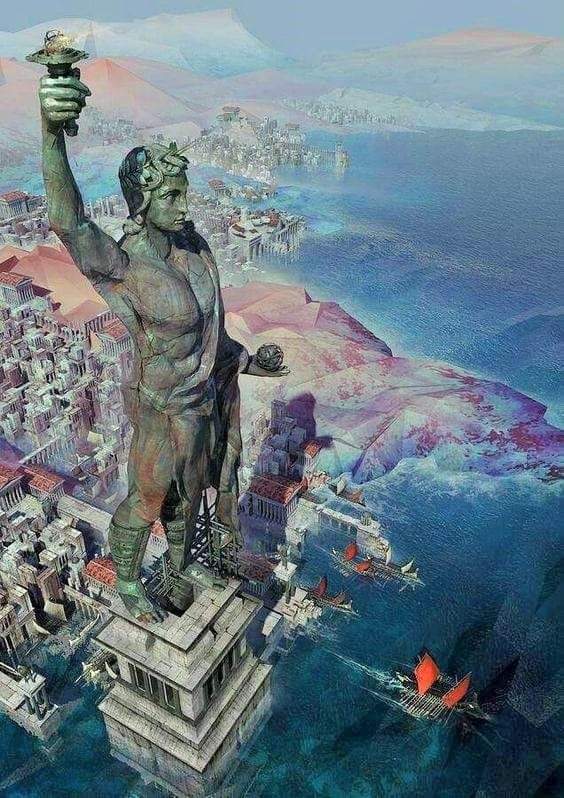
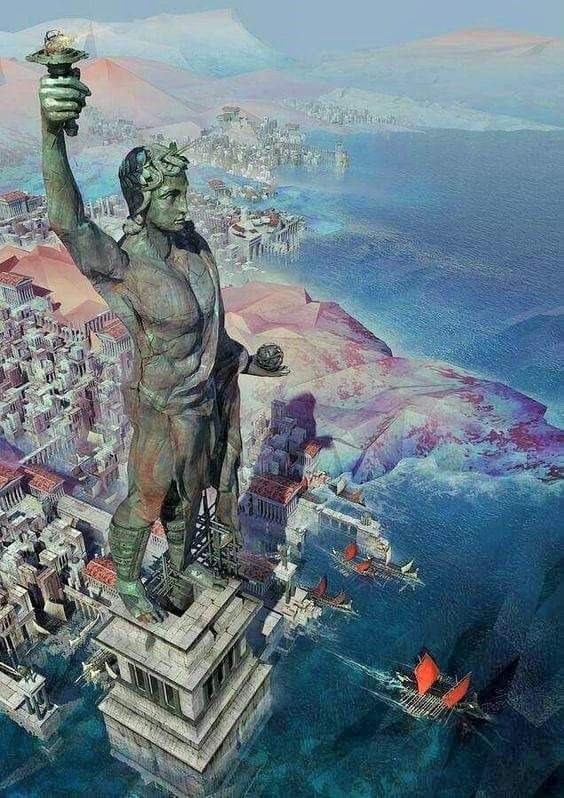
With a favorable wind, Apollonius and his disciple Damis arrived in Rhodes. As they approached, the Colossus of Rhodes stood gigantic and majestic in their view.

In awe, Damis asked his teacher, “Do you think anything could be greater than that?” Apollonius replied, “Yes, a man who loves wisdom in a sound and innocent spirit.” From The Life of Apollonius of Tyana written by Philostratus circa 208 AD


Prophecies & Earthquakes

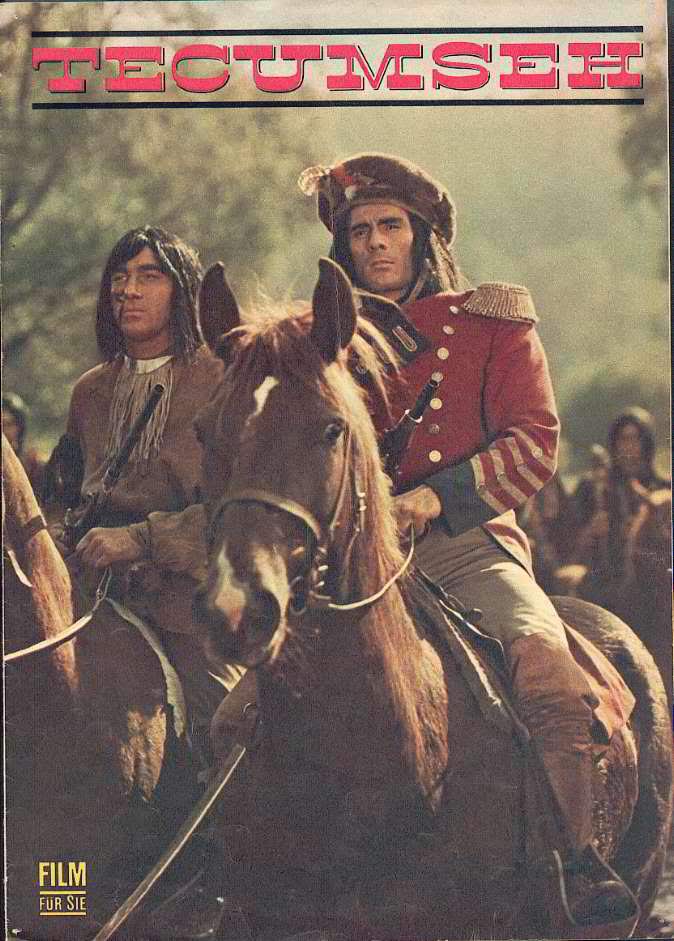
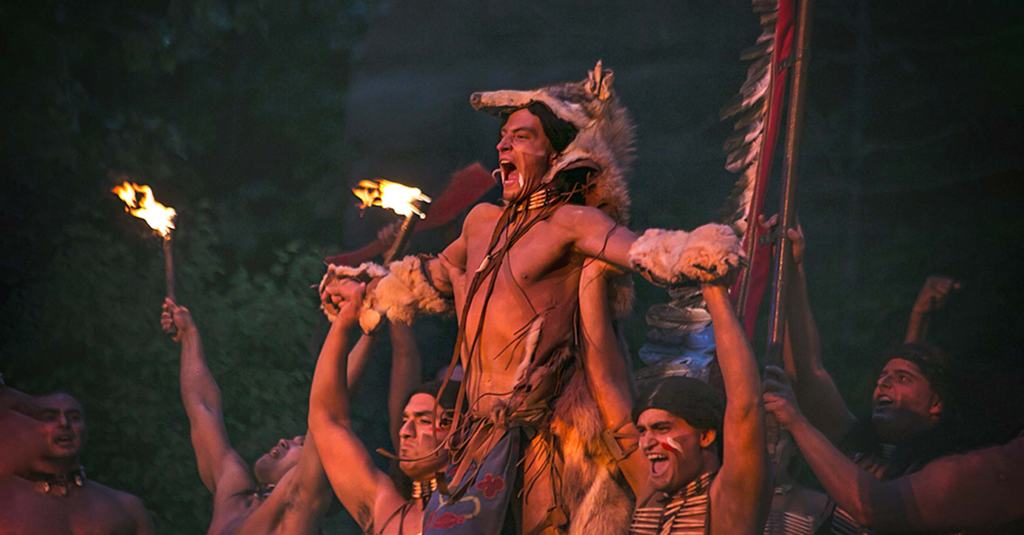
When Weshemoneto is ready the earth will tremble and shake so tremendously that great forests will fall, streams will run uphill and rivers will escape their channels. The sign from Weshemoneto (God) will be so violent that all could not help but feel it. And they will never be able to forget it.” Tecumseh. It is also widely believed that Tecumseh not only predicted these massive series of earthquakes but actually caused them.

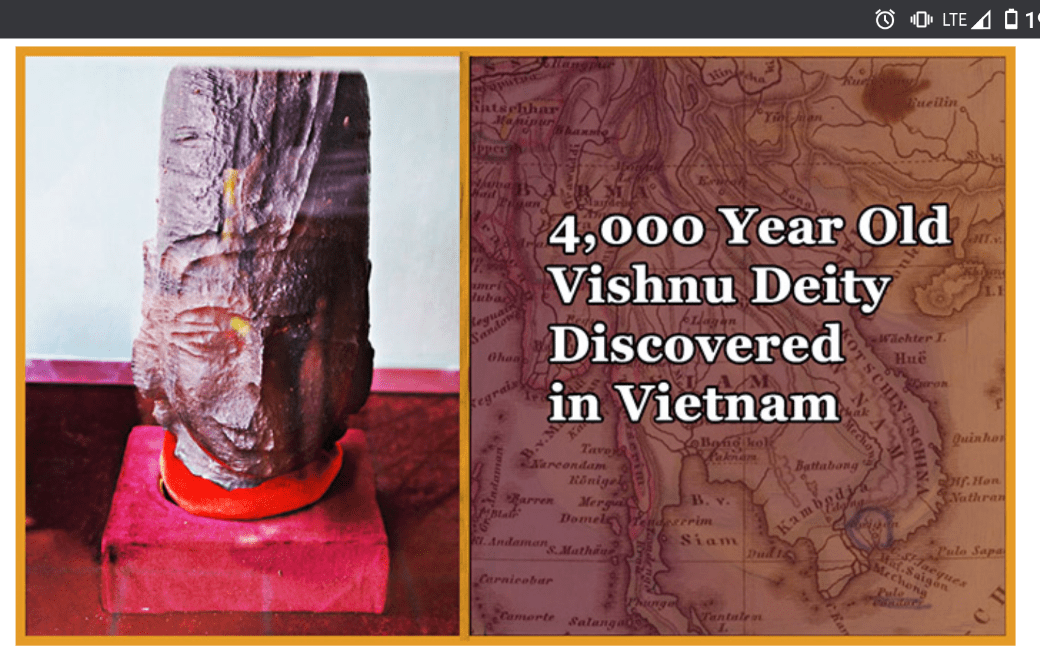
4,000 Year Old Vishnu Statue Discovered in Vietnam

NOTE: Written in May 2014

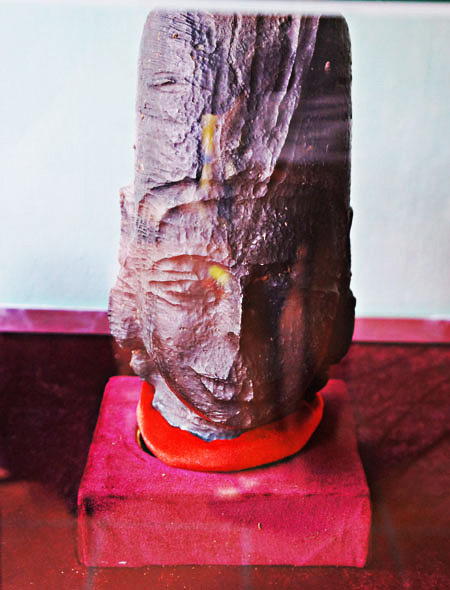
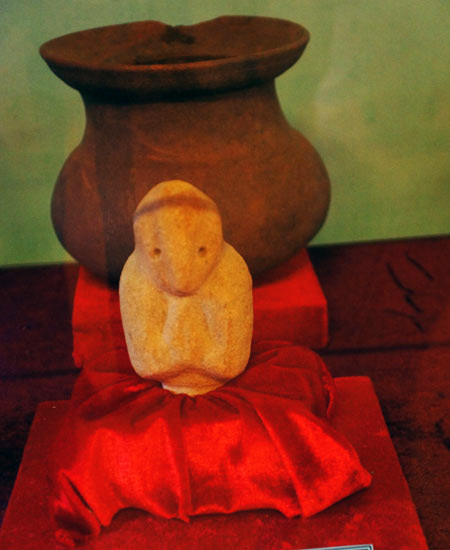
Vishnu stone sculpture, Oc Eo culture, 2,000-1,500 BC. Officially presented during the 5th Quang Nam Heritage Festival Hoi Han City, Vietnam. The Communist Party of Vietnam’s Central Committee (CPVCC) official press release states, “Vishnu stone head from Oc Eo culture, dated back 4,000-3,500 years.”

A recent news report from Vietnam features an exquisite and very ancient sculpture of Lord Vishnu. According to a press release from the Communist Party of Vietnam’s Central Committee (CPVCC) the Vishnu sculpture is described as “Vishnu stone head from Oc Eo culture, dated back 4,000-3,500 years.”

Recently the Government of Vietnam, despite its official Communist doctrine, has developed many programs and projects highlighting Vietnam’s ancient religious heritage. Its scholarly and archeological research and investigations are legitimate and its conclusions are authoritative. This discovery of a 4,000 to 3,500 year old Vishnu sculpture is truly historic and it sheds new light upon our understanding of the history of not only Hinduism but of the entire world.

Vishnu

Copper form of Vishnu from Oc Eo culture

The fact is there are no other ‘officially’ recognized Vedic artifacts that have been dated back to such an early date. This would make Vietnam home to the world’s most ancient Vedic artifact. While there are indeed many other ancient artifacts that represent the same Deity, they are not presented in the ‘Indic’ tradition and cannot be directly recognized as the Vishnu of the Indic Vaishnava tradition.

The 4000-3500 year old Vietnamese Vishnu sculpture is part of an exhibit featuring some of Vietnam’s most ancient artifacts. It was discovered in the region of Southern Vietnam’s Mekong Delta. The Mekong (Ma Ganga) River is named after the Ganges River of India. The entire region was once the home to several ancient and prosperous Vedic Kingdoms and many intriguing and unique Vedic artifacts have been discovered.

Vishnu

Vishnu stone head from Oc Eo culture, dated back 4,000-3,500 years.

The Vishnu sculpture was officially presented during the 5th Quang Nam Heritage Festival which opened on June 21, 2013 in Hoi An City. The exhibition highlights many ancient objects dated from the Dong Son – Sa Huynh – Oc Eo eras of Vietnam’s ancient history.

“Entitled “Dong Son – Sa Huynh – Oc Eo cultures”, the exhibition put on display over 1,000 ancient objects which come from across the country and are made from diverse materials, from pottery to copper, including jewelry and farming tools, from the pre-ancient period belonging to the three cultures.

The significance of this discovery cannot be overestimated. The entire history of Hinduism and Vedic culture, as taught is the academic institutions of the world, has been built upon a false construct. According to mainstream academia Vedic ‘religion’ or Hinduism did not exist until the alleged ‘Aryans’ invaded India circa 1500 BC. An even later date is given to Vaishnavism which is speculated to have been derived from animist Sun worship. Yet here we have a highly evolved art form depicting Lord Vishnu in the Far South East region of Asia dated to somewhere between 2000 BC to 1500 BC.

This completely undermines the entire historic timeline developed by mainstream academia in regards to the development of both Vedic/Hindu civilization and Indian history.

The region of modern India has always been the epicenter of High Vedic/Hindu Civilization and culture. No one anywhere has ever suggested the region of modern Vietnam to be the origin of Hindu civilization yet it is in Vietnam that we now have the world’s most ancient example of Indic style Vedic Vaishnava art. Thus it stands to reason that if Vedic Vaishnava art, culture and religion flourished 4000 years ago in prehistoric Vietnam it was undoubtedly flourishing in ancient India as well.

Once again science and archeology have confirmed the Vedic conclusion. As the Vedic literature states 5000 years ago India was home to a highly evolved and advanced civilization. This civilization was centered on its sacred traditions. The worship of the Supreme Lord Vishnu, Lord Shiva, Lakshmi and Durga was widespread and in fact spanned the entire globe.

These traditions presented themselves in diverse manners, as seen in modern India, yet among this diversity was a commonality based upon the authority of the Vedic scriptures and traditions. The recognizably Indic forms of the Vedic traditions spanned the globe from the Philippines to the Middle East and Siberia to Australia. Yet the same Divinities were worshiped and the same traditions were practiced throughout the world.

The many recent Vedic discoveries from Vietnam are providing a new and sensational view into the authentic history of the world. Not only this, it presents a challenge to Modern India and its leadership. India is home to many startling and amazing artifacts yet they sit ignored and crumbling. In many cases looters and vandals have destroyed many priceless examples of India’s ancient heritage. India’s leading academics and governing bodies are silent and if they do speak of India’s ancient Hindu heritage it is only to cast doubts and disparage India’s indigenous Vedic culture and Hindu traditions.

Astounding and marvelous ruins and artifacts that would be the pride of any other nation and people are, in general, ignored and forgotten and left to crumble into oblivion. Often they are threatened by the efforts of the various Governmental bodies in the name of progress such as the National Highways Authority of India’s (NHAI) recent attempts to destroy a 1000 year old Shiva temple in Tamil Nadu.

It is a great irony that the officially atheistic Communist Government of Vietnam exhibits more pride in its ancient Hindu heritage than the ‘Secular’ Democratic Government of India. The entire South Asian and SE Asian region was once home to many thriving Hindu Kingdoms and civilizations. The Encyclopedia Britannica writes regarding the Indian influence upon these regions “In the realm of politics, Indian influence accompanied the rise of new political entities, which, since they do not readily fall under the Western rubric of “states,” have been called mandalas. The mandala was not so much a territorial unit as a fluid field of power that emanated, in concentric circles, from a central court and depended for its continued authority largely on the court’s ability to balance alliances and to influence the flow of trade and human resources.”

Perhaps today, as India itself is reeling under the onslaught of enforced ‘secularism’ and as Hinduism has been relegated to the realm of just one of many religions, (rather than being recognized as the heart and soul of India,) we are fortunate that the former Hindu lands of Indonesia, Vietnam, Thailand, Myanmar, Laos and Kampuchea are leading the way towards the reclamation of our ancient Vedic heritage.

Vietnam

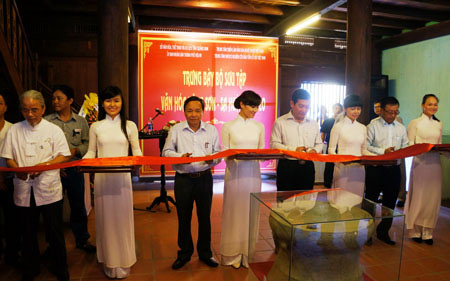
Deputy Minister of Culture, Sports and Tourism Huynh Vinh Ai and representatives from Quang Nam provincial People’s Committee and related agencies cut the ribbon to open the exhibition

Vietnam

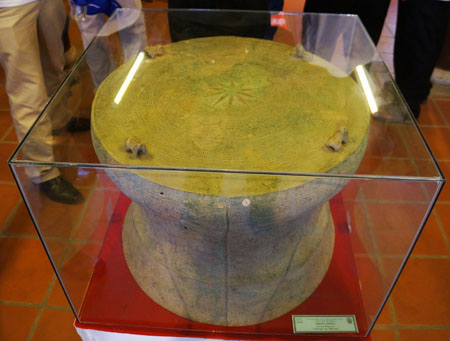
Dong Son copper drum, dated back some 2,000 years.

Vietnam

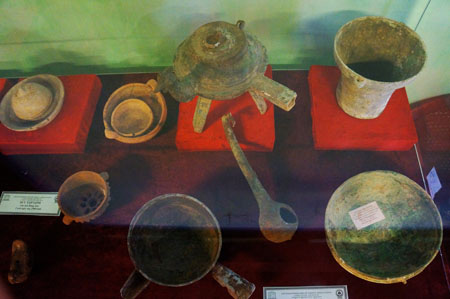
Copper utensils from Dong Son culture, dated back some 2,500-2,000 years.

Vietnam

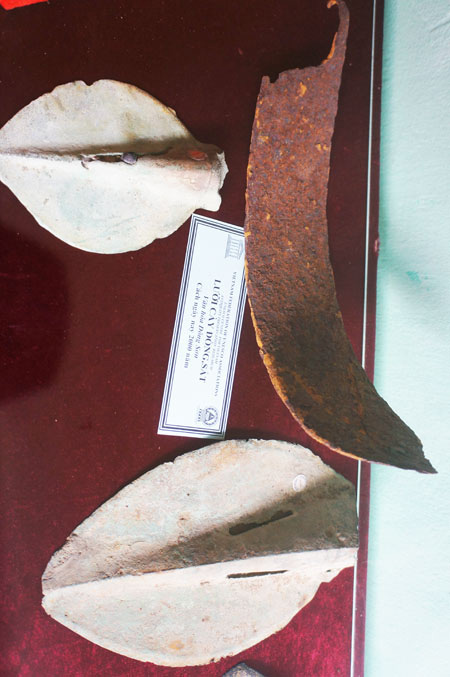
Copper and iron ploughshare from Dong Son culture, dated back some 2,000 years.

Vietnam

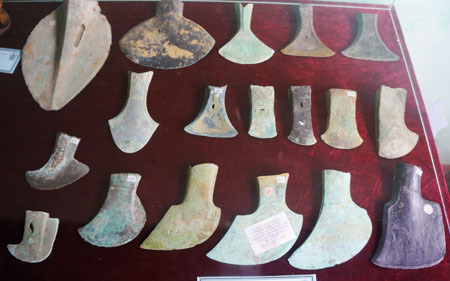
Copper axes from Dong Son culture, dated back some 2,700-2,500 years.

Vietnam

Pottery from Sa Huynh pottery, dated back some 2,300 years.

Vietnam

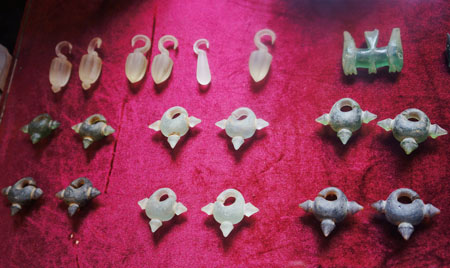
A collection of jewelry from Sa Huynh culture, dated back some 2,300 years.

Vietnam

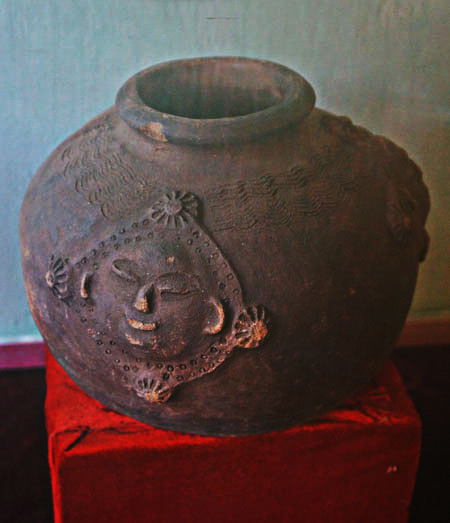
Pottery vase from Oc Eo culture

Vedic Influence on Ancient Chinese Philosophy-By Prof Huang Xinchuan

“The Vedas and Upanishads as seen in the Chinese historical record were translated freely into Chinese as Ming-Lun (the Science of Knowledge), Zhi-Lun (the Science of Intelligence) or transliterated into Chinese as Feituo, Pituo, etc. Besides, there are Chinese historical sources of Vedangas.” Prof. Huang Xinchuan

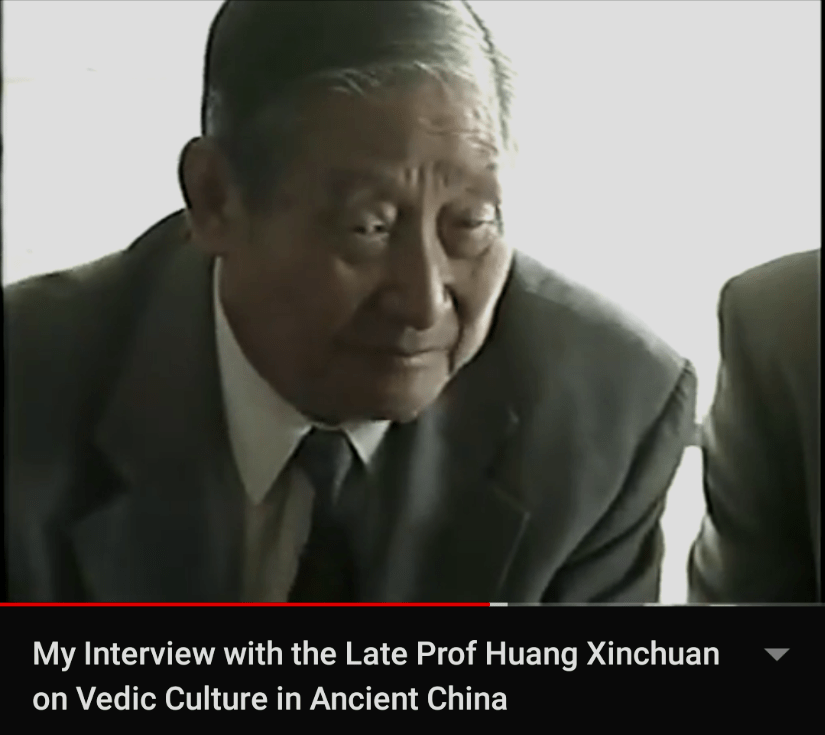
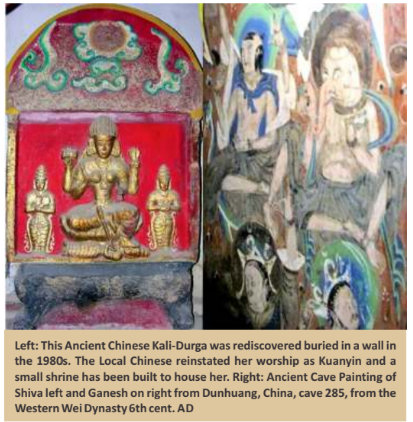
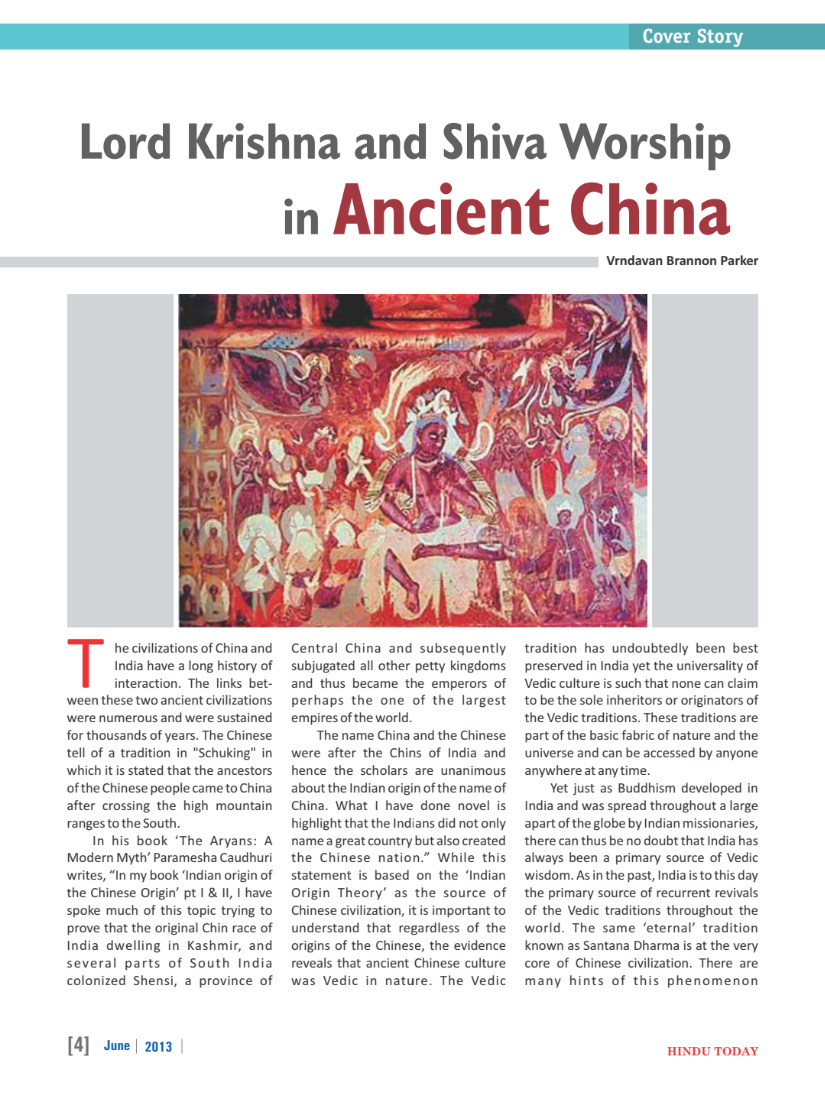
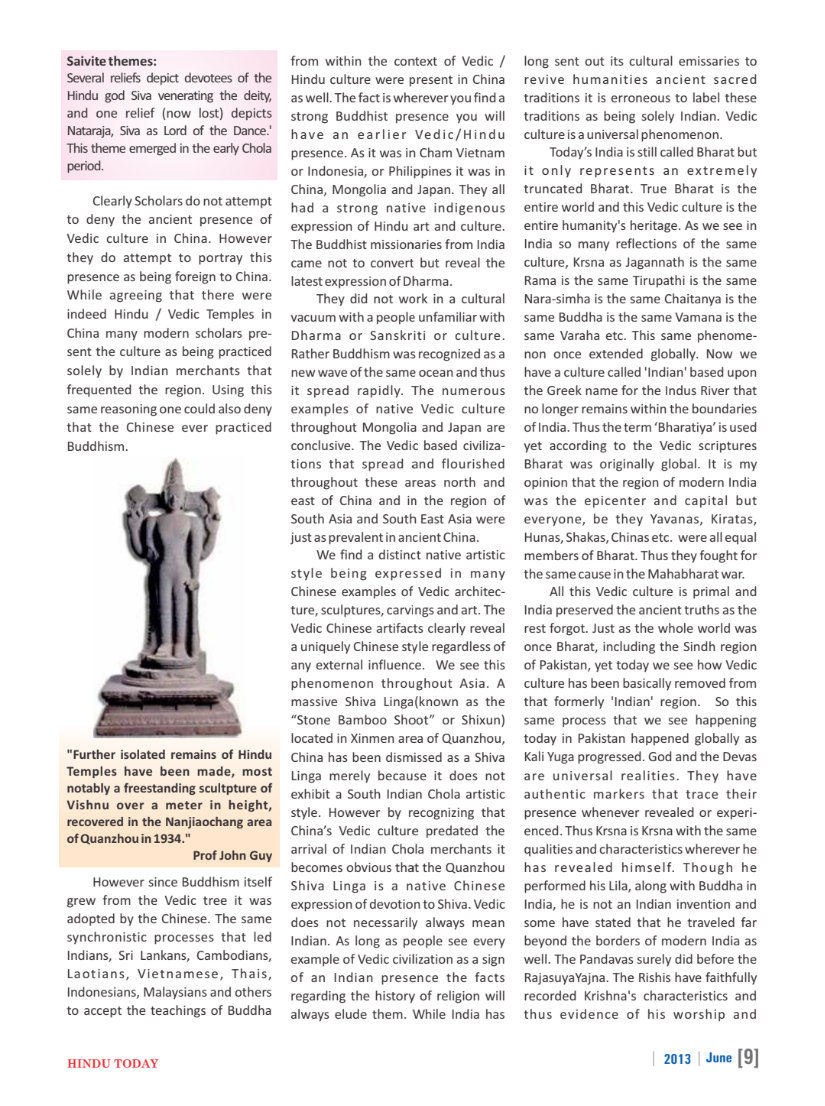
Late Professor Huang Xinchuan was the world’s leading Chinese expert on China’s Vedic past. I interviewed him on video in 2002. (audio needs cleaning up) In this interview he stated that ancient China had many Vishnu and Shiva Temples. He also said that these ancient Chinese Vedic Temple’s locations can be traced by following the ancient Incense trade routes between India, Tibet and China. Brannon Parker

Watch Here (Audio has alot of background noise)

By Professor Huang Xinchuan
Department of Oriental Philosophy
Institute of Philosophy, Chinese Academy of Social Sciences, 5 Jian Guo Men Nei Dajie St
Beijing, China

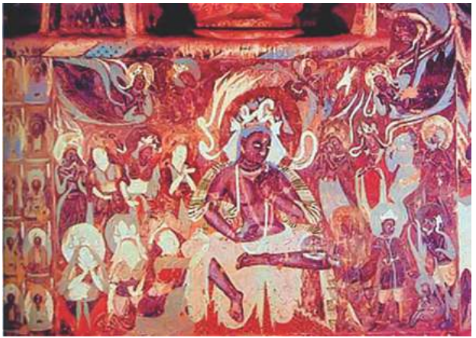
Gyanyin – Liao Dynasty (916-1125 AD) N. Shanxi or Hebei Province Chinese Vajrapani holding the Vajra (Thunderbolt) in one of the right arms.
Metropolitan Museum of Art, New York

The religious as well as the cultural interflow between Indian and China occurred as early as over two thousand years ago. Following the Buddhist and Hindu religious activities, the Indian orthodoxy philosophy—the Six Darsanas, Vedanta in particular once flourished in China. Vedanta had exerted also some influences on Chinese Buddhism and Taoism in its own way.

In China we have preserved abundant historical records and relics of Hinduism as well as Buddhism. Since the third century AD, China has discovered numerous Hindu scriptures in Sanskrit. There are records in Buddhist and Hindu scriptures either systematic or piecemeal. For example, the Vedas and Upanishads as seen in Chinese historical record were translated freely into Chinese as Ming-Lun (the Science of Knowledge), Zhi-Lun (the Science of Intelligence) or transliterated into Chinese as Feituo, Pituo, etc. Besides, there are Chinese historical sources of Vedangas. At the stage of Mahayana Buddhism, Madhyamika drew close to Vedanta in both theory and practice. Samkaraís Advitaism was in confrontation with Nagarjunaís Sunyata. We can find out the influences on some Sects of Prajna School (Three Treaties Sect, Tiantai Sect, Mahayanasamgraha Sect etc.) in Sui and Tang Dynasties and also on some eminent Buddhist monks. At the last stage of Indian Buddhism, it mixed with Hinduism again, in other words, Vajna-yana Mixed with Sakta

It is noted that Vedantaís concept and application also directly influenced the formation of the Jo-nna Sect of Tibet. The Jo-nna Sect preached the ìdoctrine of non reality of personî. This doctrine is similar to Vedantaís theory of ìtwo kinds of Brahmans, Mayavada and Adhyasa. Jo-nna Sect was formed in the 12th century and flourished during the period of 14-17th centuries, and still exists today. Tarnathís History of Indian Buddhism and a number of Buddhist works in Tibetan versions described the arguments between Samkara and Pandits Hulisasestha, Dharmakriti, Kumaralila and Kunadarorul in Varanasi, and worth making studies. Taoism is indigence to China.

Chinese Taoism has something in common with Shaktism. The interflow between Taoism and Brahmanism-Hinduism rarely appeared in ancient China, nonetheless, we can find some examples. One text in which the Tung Hsuan Section of the Tao Tsung (Taoist Canon) originated goes by the name Lin Pao Ching (Book of the Marvelous Jewel). In this text, we can find the influence of Brahmanism and Upanishad (Vedanta) in particular. It has a portrait of Yuan Shih Tien Tsun (the Highest God of Taoism) based on the portrait of the Maha Brahma of Brahmanism at the numerous kalpas in the unlimited darkness of Chaos. Thus, He transforms himself into thirty-three devas, asuras,î Ten directions of the Universe etc. Thus we can say that there existed interflow between Taoism and Vedanta.