The Sanskrit Dialect Known as English

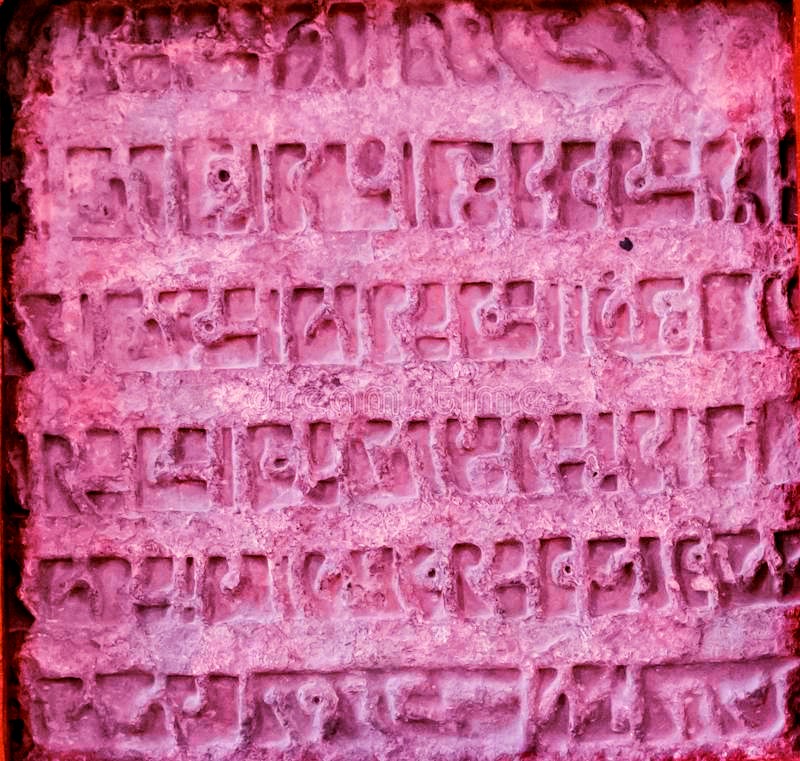
Paramara King Devpala Era Stone Inscription in Sanskrit Devanagari Script Dated Samvat 1282, (approx 820 AD) from Okhla Village Khargone, Madhya Pradesh, India

(Abstract of a Paper Presented by Neil Kalia Robinson at the World Association for Vedic Studies (WAVES) Conference held at U of Mass. in Dartmouth, Mass.)

In western curriculum there is a tendency to exclude Sanskrit as a root to the English language. Numbers and alphabet are categorized as Roman or Arabic. There is however recognition of the Indo-Aryan or Indo European language group which Sanskrit is admittedly an elder member.

How important is the role of Sanskrit in regards to world languages and in this case English, possibly the most dominant language in the modern world.
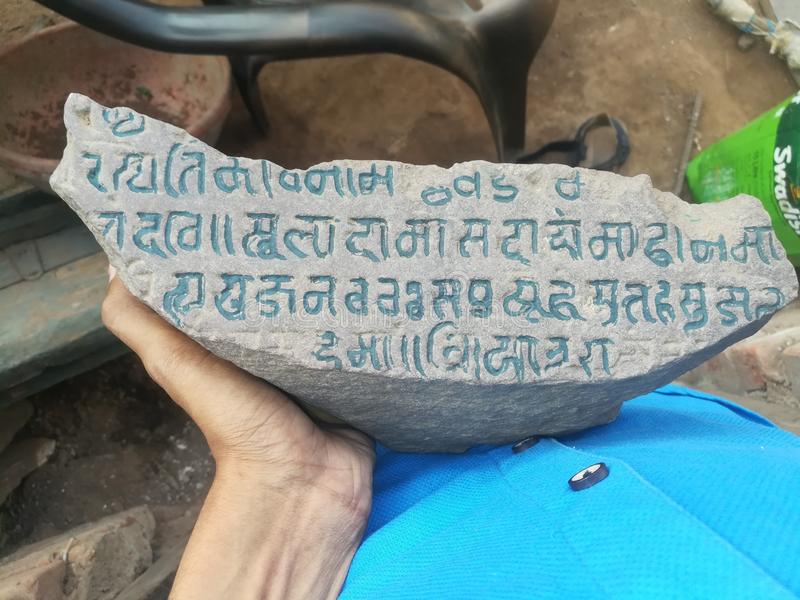

It is imperative to note that the English language, except for the current written alphabet, is as close to ancient Sanskrit as Hindi, Bengali or any other dialect from India. And yes, English numerals are Sanskrit not Arabic or Roman.

It is helpful to understand that many English words have no intrinsic denominator without application or aid of Sanskrit.


SANSKRIT INDIGENOUS

Ancient Syria

Ancient India

Ancient Philippines


The compound word San-Skrit, San; meaning whole, equal, complete, total or amount and Skrit; meaning script, scribe etc. Thus reveals the common basis and subtle collusion of English words to be non different than Sanskrit i.e. San; Sum, some, syn, same, sane, saint etc. all these English words meaning either whole, total, equal or even.

To opine that in time Sanskrit developed its refined status from a earlier more crude form of the Indo-European or other language family is herein questionable due to the vivid, concise depth of Sanskrit Syllabary and antiquated references

Manu the Vedic Noah is also Minos the founder of Crete and Menes founder of Egypt and Mannus, the Germanic progenitor of humanity

An example is given that the Name for the human race “Man” has come from “Manu” (Manoah, Noah, Nuh), the “Manvantara” descendant from the Vivasvan, the solar deity.

The word “Man” has no sufficient origins given in English. According to Vedic chronology the story of Manu stretches so far into antiquity that it no longer finds cohesive analogy in English literature, except perhaps in form of the Biblical story of Noah.
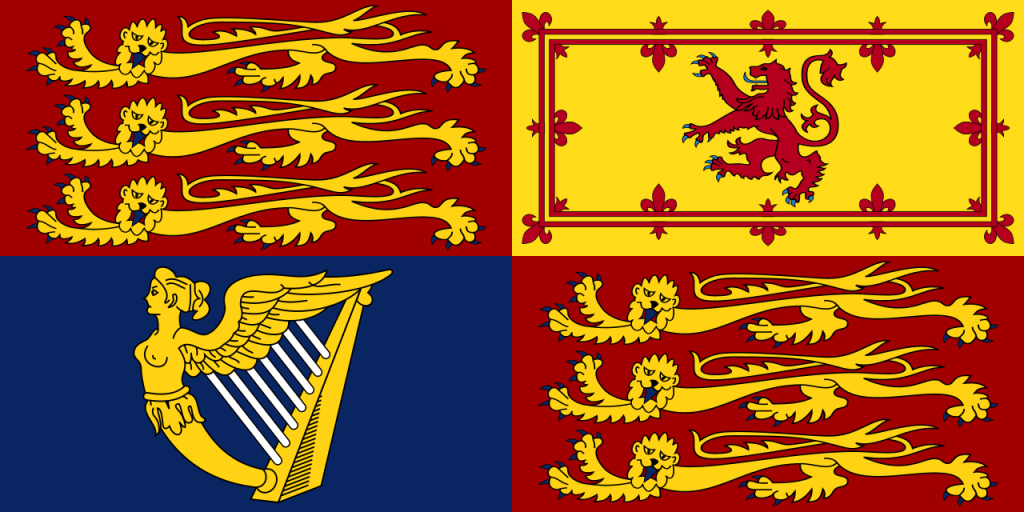
The Royal Standard of the Queen featuring 7 Lions, used in England, Northern Ireland, Wales, and in overseas territories, but not Scotland. Despite Lions having been extinct for 1000s of years, Linguistic Memory has preserved the Lion’s Iconic, Royal, Sacred and Symbolic Cultural Significance

In United States of America we have no monarchy so the title “King” can only refer to periods and places where where it actually did or currently exist, such as The “Queen” of England. Yet we still use the word “King and Queen” in North America, because in the past it was used frequently in reference to actual monarchy.

Even though there are no lions in England the Kings where still known as lion hearted. Coats of arms often portrayed lions attributing the qualities of the lions to the kings such as courage, strength, chivalry, generosity and resourcefulness.

Ancient Vedic Philippine’s Sanskrit Laguna Copperplate Inscription. Philippines most ancient calendar dated document 900 AD is written in a Sanskrit language as evidenced by the opening words ‘Swasti shaka warshatita 822 waisakha masa ding jyotisha. chaturthi krishnapaksha so-‘ ‘Hail! In the Shaka-year 822; the month of March–April (Vaishakh) according to the astronomer: the fourth day of the dark half of the moon; on..’ Note Opening word ‘Swasti’ as in Swastika meaning ‘Health and Well-being.’

The old English spelling of King is “Cing” As in ancient Sanskrit appellation King, Cing, Singh, Simha or Simba (Swahili) for lion meaning powerful chief or leader.

The English language, full of such descendants perceived directly in relation to its sister dialects, Hindi and Bengali is no further remote from Sanskrit. Apparently Sanskrit similarly supplies integral structure and identifying roots of English.

Could the very word “Sanskrit” claim what it may well be a “Samskrit” or “complete alphabet” of a universal language originating from the subtlemost realm of consciousness?

Even Professor Max Mueller had to acknowledge the greatness of the Devanagari script admitting its very perfection and realizing its antecedent superiority. Vedic Sanskrit of Ancient India very possibly may contain the “perfect” contributing factor providing spiritual and metaphysical roots and reason to many branches of global languages. < Prev

Kikkuli Inscription.3,400 year old Vedic Syrian Sanskrit Horse Training Manual. ‘virtually Vedic eka-, tri-, pañca- sapta-, nava-vartana. Kikkuli apparently was faced with some difficulty getting specific Mitannian concepts across in the Hittite language, for he frequently gives a term such as “Intervals” in his own language (similar to Vedic Sanskrit). Kikkuli was the Hurrian “master horse trainer” (assussanni) of the land Mitanni” (LÚA-AŠ-ŠU-UŠ-ŠA-AN-NI ŠA KUR URUMI-IT-TA-AN-NI) and author of a training text written primarily in the Hittite language (as well as an Old Indo-Aryan language, similar to Sanskrit, as seen in numerals and loan-words), dating to the Hittite New Kingdom (around 1400 BCE). 

Neil Kalia Robinson is one of Honolulu Hawaii’s imminent and popular artists, Neil Kalia’s murals decorated many of Honolulu”s premier clubs, venues, halls and Temples. Musician, DJ, promoter, and Co-founder of Vedic Empire Productions. Neil has spent over 30 years researching the cross cultural connections between the world’s ancient traditions and languages. One of the world’s leading scholars and researchers on ancient Polynesian tradition and language and it’s Sanskrit and Vedic roots.
Pharaoh Akhenaten, Sanskrit Mittani & Ancient Mediterranean Religion

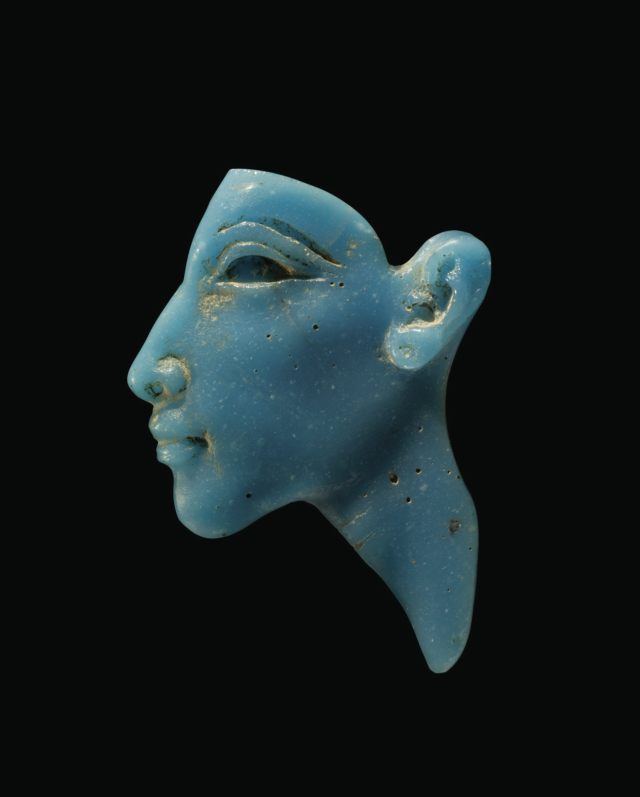
A 3300 year old stylised glass portrait of the Egyptian Pharaoh Akhenaten. Amarna Period © Corning Museum of Glass

EDITORIAL, Aug 8 (VNN) — Los Angeles, CA – April 10, 2000

Recently, the Los Angeles County Museum of Art held an exhibit called “Pharaohs of the Sun“. It turned out to be the most popular exhibit ever. The exhibit featured artifacts from the reigns of Akhenaten, Nefertiti, and the famous King Tut.

Modern scholars claim that Akhenaton was the worlds first known monotheist. However, the fact is, he was actually reviving an ancient monotheistic religious tradition. Unknown to most is the true nature of this religion. This religion was not only Vedic, but was actually an Indigenous Egyptian form of Vaisnavism.

Research has proven Akhenaton’s Vedic roots through his familial connections to the Hurrian/Mitanni peoples. Everyone agrees that the Mitanni were a Sanskrit speaking and writing people and they worshipped the Vedic gods. What is forgotten is the fact that Akhenaton’s father, his mother, and wife were all related to the Vedic Mitanni. Thus, it is no surprise that Akhenaton’s religion and Vedic religion share so many vedic similarities. The research of BhaktiAnanda Goswami has proven the Vaishnava nature of his religion.

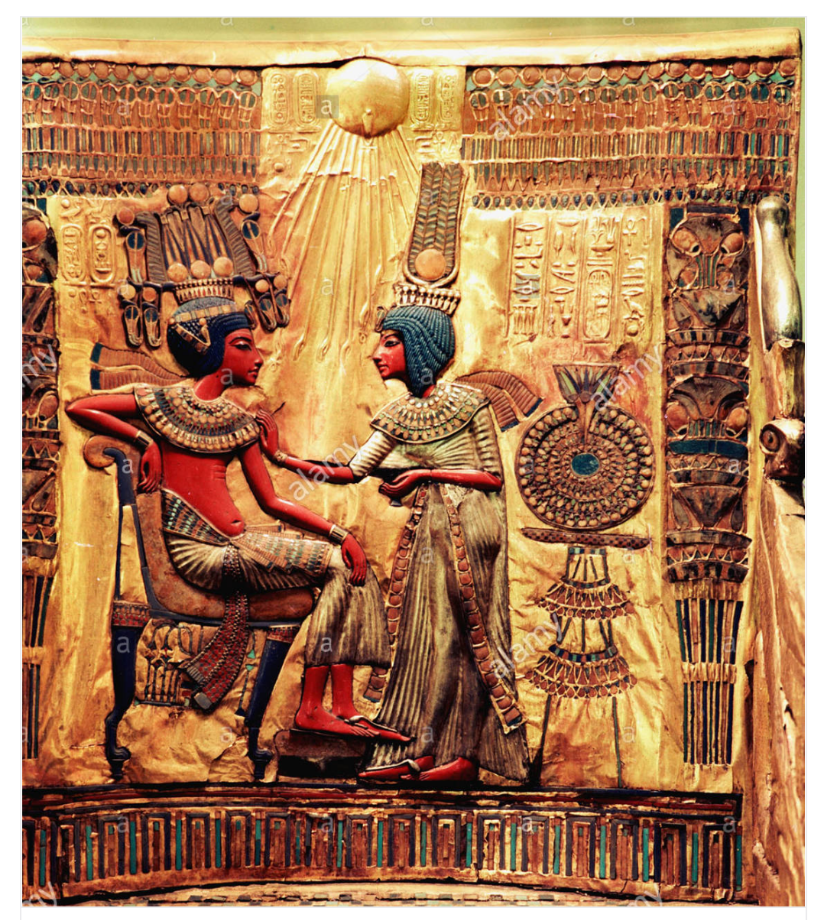
Detail of the throne of Tutankhamun. Queen Ankhesenamun holds a salve-cup and spreads perfumed oil on her husband’s collar in a typical Amarna style scene. The sun-disc Aten shines above the royal couple. Country of Origin: Egypt. Culture: Ancient Egyptian. Date/Period: 18th dynasty 1327 BC. Material Size: Wood, gold, silver & precious stones.

On April 10, 2000, BhaktiAnanda Goswami of E.O.H.N. (Ecumenical Order of the Holy Name), and Vedic Empire Productions put together a tour and presentation on Akhenaten’s Vedic/Vaishnava past. During the two hours of the tour BhaktiAnanda Goswami enthusiastically pointed out the various vaishnava connections. Again and again he amazed and enlightened the tour participants. It is truly amazing how many ancient artifacts are related to the worship of Hari. Using the torchlight of knowledge, BhaktiAnanda Goswami clearly revealed the Vaishnava nature of Akhenaton’s religion. During the tour, many people unconnected to our group were intrigued and asked intelligent and sincere questions which BhaktiAnanda Goswami answered.

The program continued that evening at the Los Angeles Hare Krishna Temple where BhaktiAnanda gave a detailed talk on various examples of the ancient world’s global Vaishnava traditions. Using a scientific approach called linguistic archaeology, some of the key points he presented are as follows: 1) The original forms of the Supreme Personality of Godhead worshipped in the Mediterranean region were Radha-Krishna and Balarama. The center of this ancient Vaishnava culture was the Greek Isle of Rhodes.

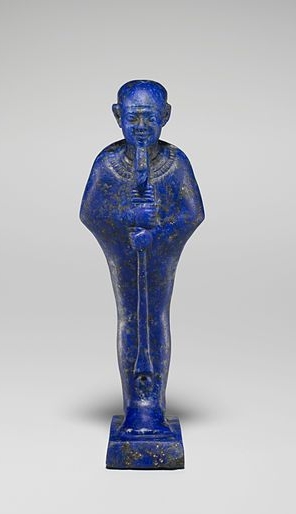
950 BC Creator Ptah Divine Father Pita Lapis Lazuli

2) Jews, Egyptians, and Europeans all worshipped Lord Krishna in many forms all familiar to the modern day Vaishnava. Forms such as Matsya, Kurma, Narasimha, and Kalki. This tradition was called Heliopolitan because they worshipped Helios (Greek for Hari).

3) Hundreds of Jewish, Egyptian, and Greco Roman deity names (theophoric names) can be clearly identified as names of Krishna or Vishnu.

4) Official religious emblems, including the state seals of the Jewish kingdoms of Israel and Judah, were indisputably Vaishnava symbols, and directly connected to Akhenaton’s religion and the eternal Vaishnava traditions of India.

5) In ancient Egyptian religion, creation began from the form of NHRYN (Narayan) lying on the primordial waters. A lotus grows from His navel, and on this lotus appears the four armed and four headed Heliosphanes (Brahma) who speaks creation.

The Chios Kore

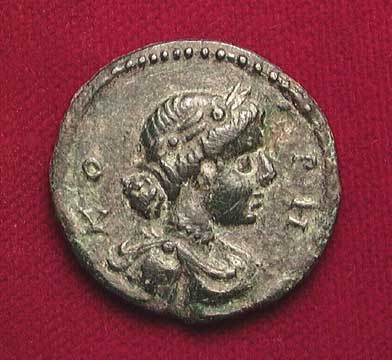
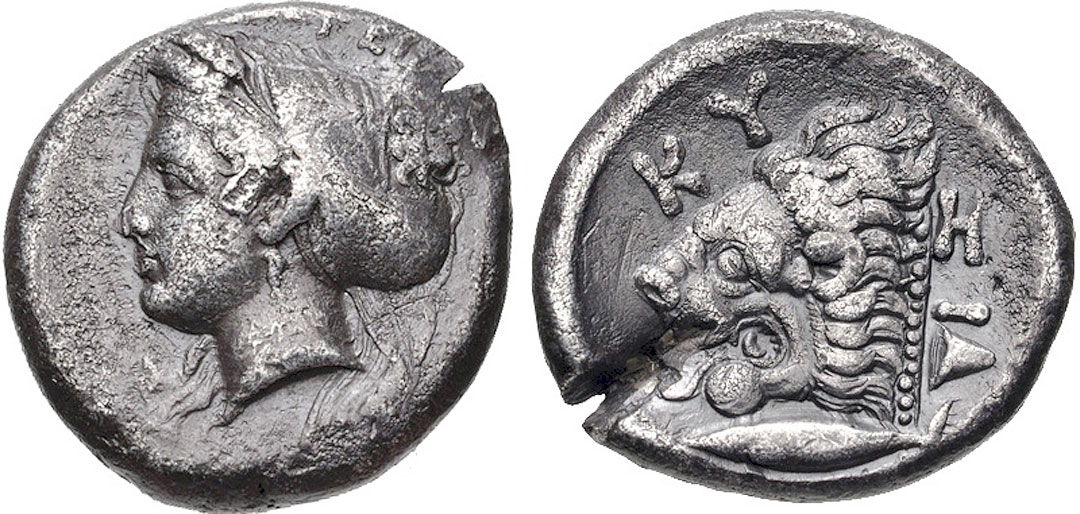
Ancient Cretan Korous 600 BC

6) Ancient Mediterranean Vaishnavism can be properly understood when we compare it to the authentic Vaishnava scriptural sources especially Bhagavad-Gita, and Srimad Bhagavatam, where the viratarupa (Universal Form) conception of the Supreme Lord is revealed. For example, Krishna’s self revelation in the “I Am” verses of the Bhagavad-Gita directly parallels the great hymns of HR-Heri of ancient Egypt. Therefore, ancient Egyptian religion considered HR-Heri the origin of all gods and deities. That is why they used the name HR-Heri or Asu (Vasu) along with deities considered to be aspects of Heri. Thus, the god of wealth was called KPHR/Kepe-Heri because in the Gita Krishna says “·I am Kubera”.

7) Being authentic followers of Vaishnavism, ancient Heliopolitan cities always had a presiding deity of Helios (Hari). He was always worshipped with His Fortuna (Goddess of Fortune or Shakti). Evidence shows that the original form of Helios (Hari) was worshipped on the Greek Isle of Rhodes as Kouros. The original form of Fortuna was named Rhoda.

8) Even modern scholars accept that Kouros was considered the origin of all the Greek gods. He is described as a beautiful youth tending His sacred white cows with His elder brother and friends. He plays a flute and leads the boys in dance as they clash their cymbals. He dances with Rhoda and Her expansions in a circle dance named after Him called the Chorus Dance. As the Lord of the Dance He is called Choreagos from which is derived the modern word ‘choreographer‘. The peacock feather was the pre-eminent symbol of both Helios and Kouros. Throughout the region Helios (Hari) was worshipped as the Lord of the Heart and the Supreme Personality of Love. That is why He is the Lord of all living entities, cultures, and traditions.

All of this evidence highlights the fact that we are all rooted in the tradition of pure devotional service to Sri Sri Radha Krishna and Balarama. BhaktiAnanda Goswami hopes that his research can be instrumental in reuniting all of God’s children and awaken the world to its common heritage as the people of Hari.

Peplos Kore, cast and reconstruction, Cambridge Museum of Classical Archaeology

Queen of Jhansi – World’s Last Functioning Vedic Government – 1857-58 AD

Pendant with Painting of Rani of Jhansi, Lakshmi Bai

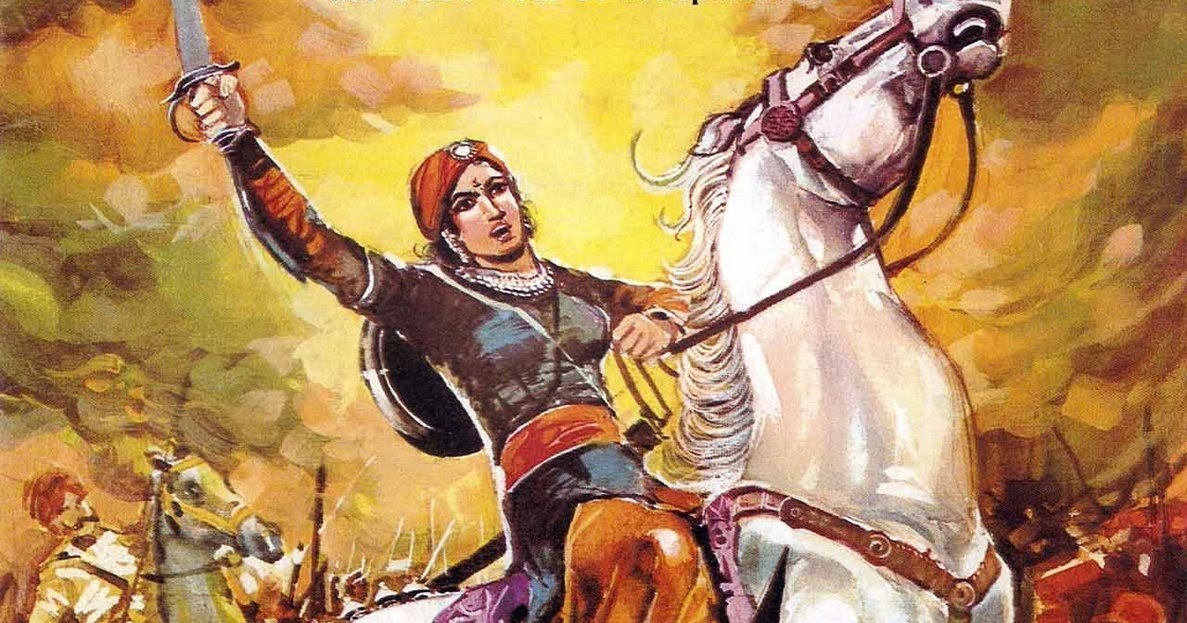
Many have spoken of Ram-Rajya or the ideal Vedic Kingdom. Most believe it to be a mythological ideal that may or may not have existed thousands of years ago. Yet history reveals that a such an ideal functioning Vedic administration existed as recently as 1858 AD. This was a functioning Vedic government led by an ideal Vedic Ruler. She was Queen Lakshmi Bai, the famous Rani of Jhansi. Noted as a brave warrior and military leader, she died at 29, battling the British. She was a living legend even during her short reign and lifetime. Long a source of inspiration, Lakshmi Bai remains as an icon of Independence and the Heroic Spirit.

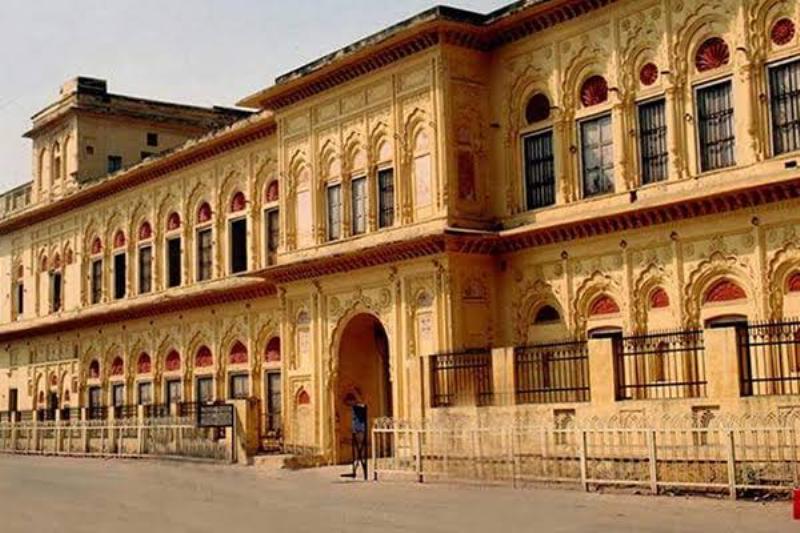
Royal Palace of Jhansi

Below is a very brief account from the book `Rani of Jhansi -Lakshmi Bai’ by E. Jaiwant Paul. It highlights a rare glimpse into the actual functioning of a Vedic based administration and governing system.


“The Rani’s daily routine at this time was to get up at 5 am. The first thing she did was to exercise in the gymnasium. She spent an hour or two every day practising with Indian clubs and honing her skills with the sword, wrestling and horse riding. She would then take a bath with fragrant attar (of roses) and wear a Chanderi sari of faultless white. She would next sit down for her daily prayers and worship with the court musicians providing the music for the puja.

Later in the morning the sardars and other state officials came to pay their respects. There were one hundred and fifty of them and even if any one of them failed to turn up, her keen eye would notice the absence and the next time they came, she would ask the reason for it. After lunch she would take an hours rest, unless there was some urgent work. At 3 pm she held the durbar (audience).

For this function she usually wore male attire, which consisted of Jodhpur breeches, a blue silk jacket and a turban. A sash went around her waist in which she carried a sword, the hilt and scabbard of which were embellished with rubies.

She was tall and beautiful and her attire added to her already impressive presence.

Occasionally for the durbar, she opted for conventional garments and wore a white sari with several strings of pearls around her neck and diamond studded bangles and rings. She sat on a gaddi or throne, flanked by two attendants bearing maces (clubs) damascended with silver and gold.

Jhansi Ganesh Mandir

At the durbar Diwan Lakshman Rao, the Chief Minister, presented the relevant documents to her which she quickly scanned and issued clear and precise orders. She would sometimes write her orders in her own hand but usually she issued them orally to be taken down by clerks. Hers was an open court and anyone who had a grievance could walk in and present their case. She decided civil and criminal cases on the spot.

The Maha Lakshmi Murti at the Mahalakshmi Temple of Jhansi worshipped by Queen Lakshmi Bai. Maha Lakshmi was also her ‘clan’ Kuldevi, Family-Goddess.
Jhansi’s Maha Lakshmi Temple and Lake today

Twice a week the Rani and her son went in procession to the Maha Lakshmi Temple with its lake filled with lotus flowers. The procession was an impressive one and wound through the main streets of the city. Sometimes she went on horseback and at other times by palanquin decorated with curtains and gold brocade.

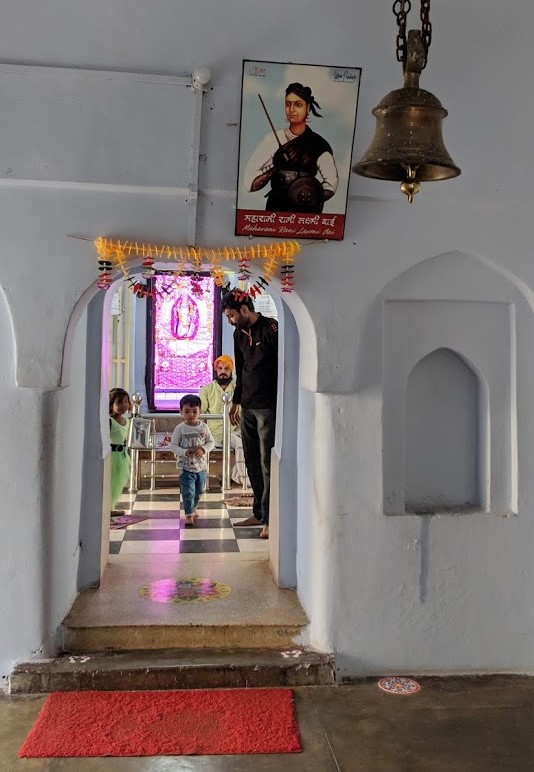
The Interior of the Mahalakshmi Temple features a Portrait of Queen Lakshmi Bai

Her ministers, feudatories and other officials mounted on horses accompanied her. At the head of the procession was a drummer and a flag-bearer while the rear was taken up by a mounted escort of soldiers in Maratha uniforms. A further touch of glamour was added by her beautifully attired handmaidens who walked alongside her palanquin. If it became dark, men bearing flaming torches lit the way. At the palace gates, the melodious notes of the shenai greeted her return.

One cold wintry evening, while returning from the temple she saw the poor of the town in course cotton garments huddling around a hastily built fire in the by-laws of the city. She got down from the palanquin and asked them all to come to her palace in four days time. All the tailors of the town were kept very busy for those four days. When the poor in their hundreds gathered in front of the palaces, every one of them was handed over a woollen jacket, cap and a blanket.”

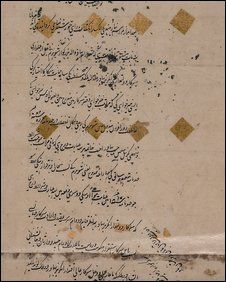
A letter written by Rani Lakshmibai in the Persian Language; citing the hypocritical tricks of Lord Dalhousie for annexing the kingdom of Jhansi, found 2009 in the British Library, UK.
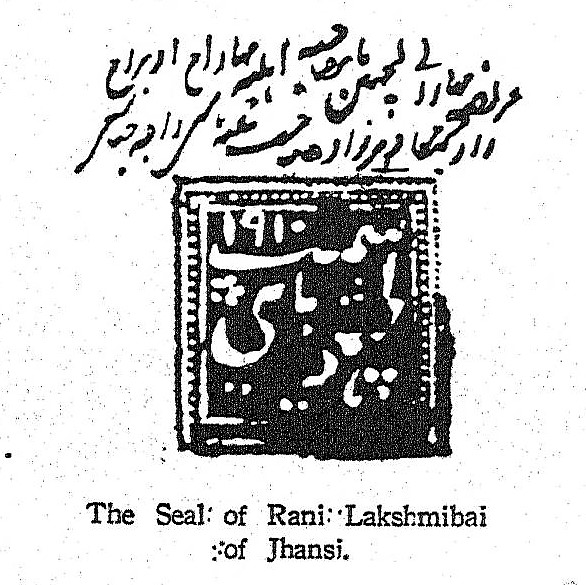
Royal Seal of Rani Lakshmi Bai
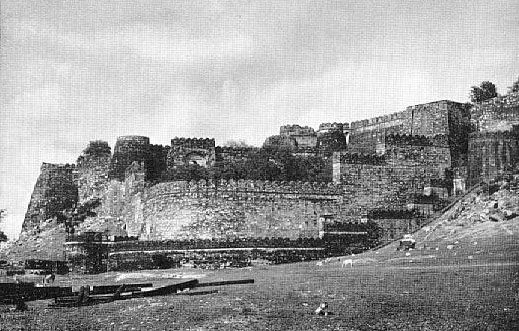
Fortress of Jhansi 1880s

Samadhi Stahl Tomb of Queen Lakshmi Bai
Jhansi ki Rani 1953 India’s First Technicolor film was on the life of Queen Lakshmi Bai
The Tiger and the Flame’ 1956 Promotional Poster/Serbian

Watch ‘The Tiger and the Flame‘ (JHANSI KI RANI, 1953) is quite an unusual film, a big-budget Indian historical epic filmed in English, billed in the credits as “India’s First Picture in Color by Technicolor.”


Source: Rani of Jhansi – Lakshmi Bai – A Tribute to Lakshmi Bai, the Rani of Jhansi, the Legendary and Valiant 19th-century Queen, who lives more in ballads, folk tales and stories of Bundelkhand, Central India, than in written accounts. Available Here

Life of Queen Lakshmi Baiwikibio

Ancient American Hanuman & the Sign of the Wind-God

Ancient Mayan Sculpture of the ‘Copan Howler Monkey’ carrying a Club with the sign of the Wind God. The Vedic ‘Hindu’ Hanuman also carries a Club and is known as Pavana Kumar, the Son of the Wind God

“One has always wondered about the fact that India and Mexico have so many similarities. We look alike…Besides, there are said to be some ancient links between the Mayans and southern India, which makes our temple architecture similar.The Howler Monkey God Hun-Ahan of the Mayas resembles the revered Monkey God Hanuman in Hinduism.” India’s Ambassador to Mexico & Belize Sujan R. Chinoy, 8/13/20 India and Mexico: Case for a Strategic Partnership

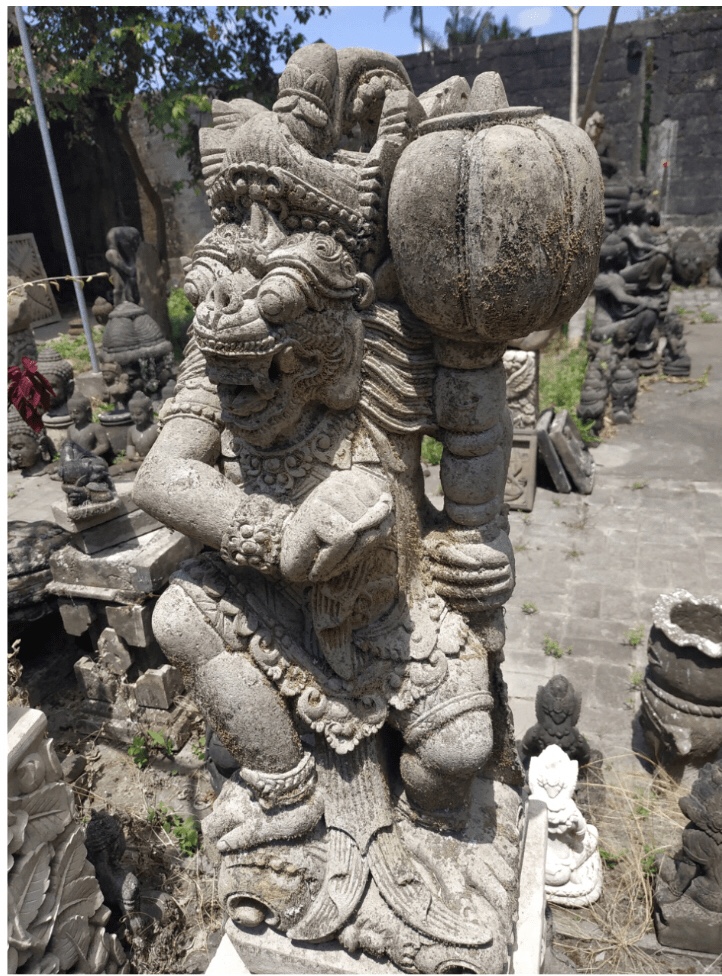
Balinese Hanuman with Club

We find other intriguing clues connecting ancient Mexican and Central American religion with the Vedic mystical traditions. Dr. Francisco M.P. Apodaca, an engineer with doctorate degrees in Archeology and Geology and member of the indigenous Mexican ‘Dance Society,’ identifies Quetzalcoatl as the same Supreme Godhead Hari, Vishnu of the Vedic Vaishnava Religion. Like Vishnu’s avatar of Lord Ramachandra, Quetzalcoatl’s body is green and at times he assumes a Krishna/Narayana-like blue form as well. In this blue form he is known as Kuauhtemoc.

_________________________

As with Vishnu and Garuda, once again the Eagle is present. For this blue form of the Supreme God Quetzalcoatl known as Kuauhtemoc, means ‘One who has Descended like an Eagle”


ANCIENT AMERICAN HANUMAN

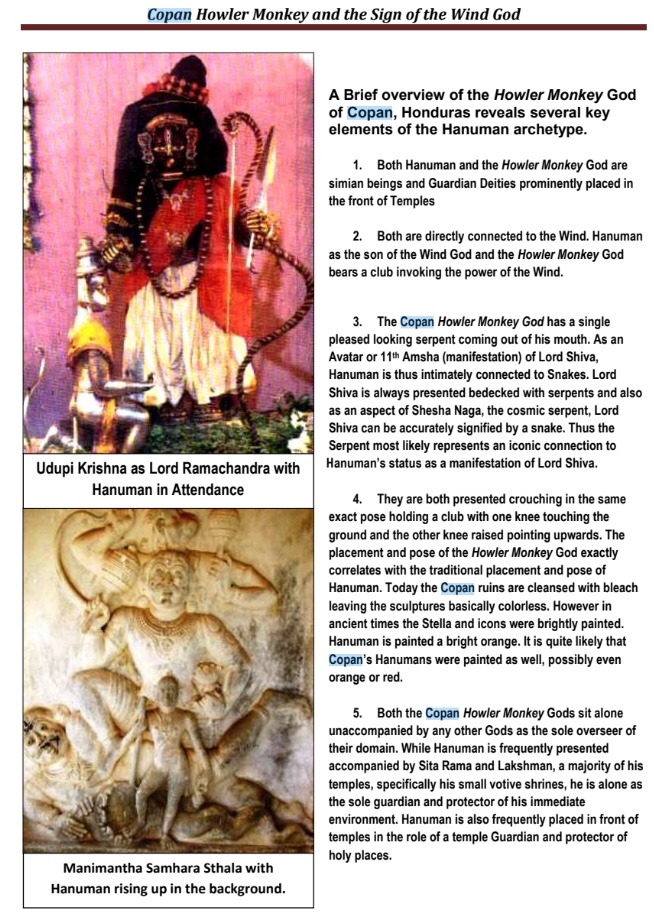
A chapter from my book: The Serpent, the Eagle, the Lion & the Disc entitled Copan Howler Monkey God and the Sign of the Wind God’


The great God Quetzalcoatl of the ancient Central American Traditions is the same Supreme Godhead, Hari, Vishnu of the Vedic Vaishnava Religion. Like Vishnu’s avatar of Lord Ramachandra, Quetzalcoatl’s body is green and at times he assumes a Krishna/Narayana-like blue form as well. In this blue form he is known as Kuauhtemoc. Again the Eagle is present for the name of this blue form of the Supreme God Quetzalcoatl verily means,’One who has Descended like an Eagle


The similar architectural styles of South India and ancient Central America are not the only commonalities to be found. The Howler Monkey Gods of Temple 11 located in Copan, Honduras are a case in point. This Howler Monkey Deity is nearly identical to the revered Vedic Monkey God Hanuman. Beyond being monkeys, it is remarkable that both are directly connected to the Wind God. Hanuman is the Son of the Wind God and the Copan Howler Monkey God carries a rattle/club marked by the Sign of the Wind God. Mayan tradition actually identifies him, like Hanuman, as a Wind deity as well

Engraved conch shell from Spiro Mounds depicting a Falcon Warrior, Oklahoma, USA

VaidehI janakAtmajA
abravIddraSh TumichchhAmi bhartAraM VAnarottama/
Sita, the daughter of King Janaka spoke as follows: “O Vanarottama, the foremost of Vanaras! I long to see my husband, Ramachandra.”

Lost City Discovered In Honduras Could Be The City of Hanuman